
When care moves from hospital to home, families often focus on medications, appointments and who will help with bathing or meals. Those details matter. Equally important, and frequently overlooked, is the home itself. A living space that worked well for an independent adult can suddenly feel awkward, unsafe or exhausting once someone needs assistance with mobility, personal care or continuous monitoring.
Preparing the home is not about turning a house into a clinic. It is about reducing preventable risks, making caregiving less physically demanding, and protecting the dignity of the person receiving care. In Kenyan homes — whether a Nairobi apartment, a family house in Kisumu, or a compound with several generations sharing space — thoughtful preparation can mean the difference between a manageable care plan and a household under constant strain.
Start with an honest walk-through
Begin by walking through the spaces your loved one uses most: the bedroom, bathroom, sitting area, kitchen path and any steps between them. Ask practical questions. Can they move from bed to chair without twisting awkwardly? Is the bathroom bright enough at night? Are doorways blocked by furniture that made sense before but now create obstacles? Invite the person receiving care into the conversation whenever possible. Their preferences, privacy needs and sense of control matter as much as safety.
A professional home care assessment can strengthen this review. Nurses and therapists who regularly support people at home are trained to notice hazards families may overlook, from unstable stools used as bedside tables to poor lighting near toilets. Their recommendations should be proportionate: start with the changes that most reduce risk, then refine the environment as needs evolve.
Make movement safer without removing independence
Falls are a common reason older adults and recovering patients lose confidence and independence. International public-health guidance, including advice from the World Health Organization and CDC on older-adult fall prevention, emphasises practical environmental measures such as good lighting, clear walkways, secure handholds and removal of loose rugs or clutter. These principles apply just as well in Kenyan homes as elsewhere, even when the architecture differs.
Practical steps often include:
- Clearing corridors of shoes, jerry cans, extension cables and low stools. - Securing or removing loose mats, especially in bathrooms and near entrances. - Improving lighting in hallways, stair edges and the route from bed to bathroom. - Adding grab rails where a qualified installer or care assessor recommends them. - Placing frequently used items within easy reach so the person does not climb or stretch unsafely.
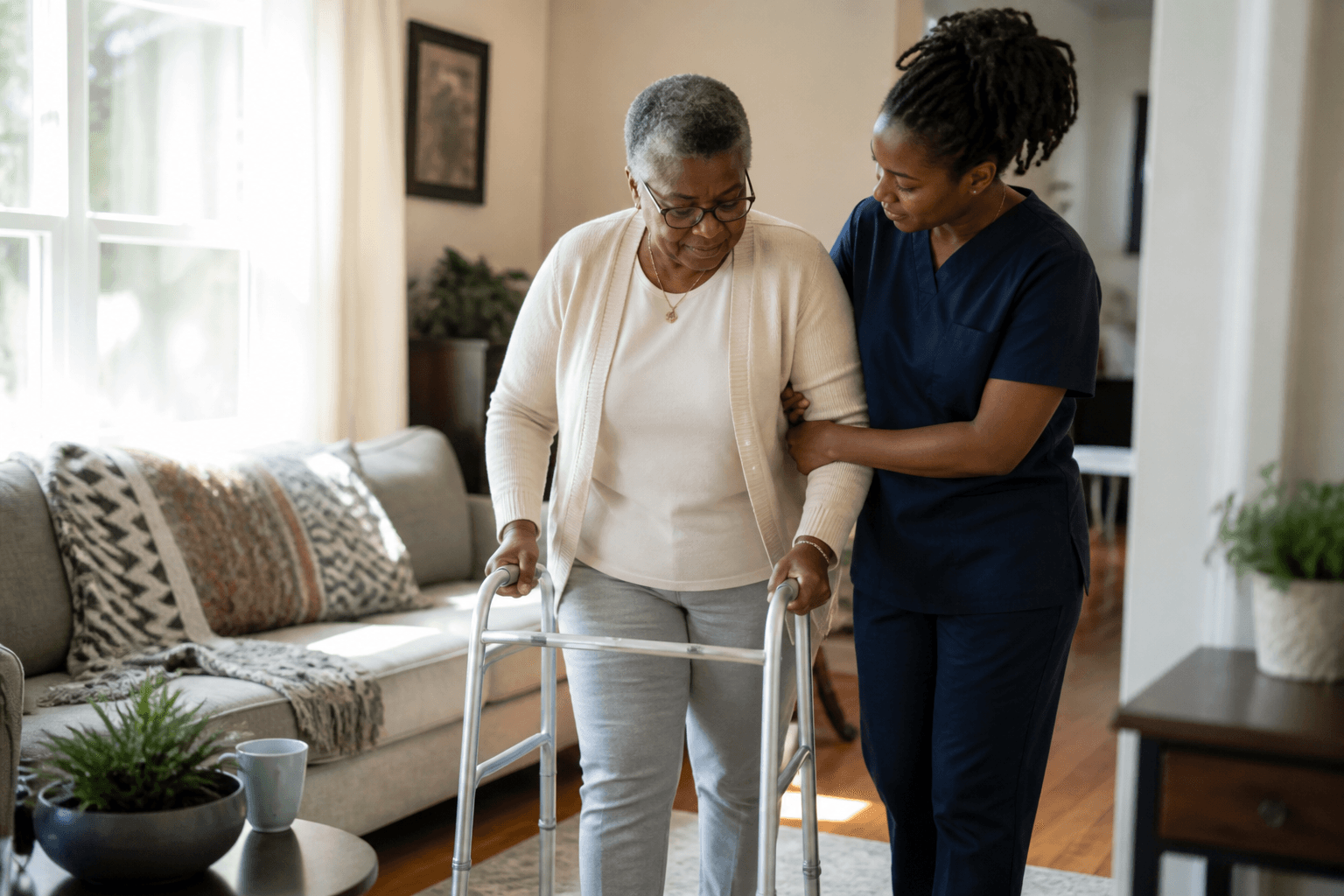
If mobility aids such as a walker, cane or wheelchair are part of the plan, practice using them in the actual rooms and thresholds of the home. An aid that works in a clinic corridor may need different technique on a tiled verandah or uneven compound path. Physiotherapy or occupational therapy support at home can help translate clinic advice into real-world movement.
Prepare the bedroom and bathroom for daily care
The bedroom often becomes the centre of recovery or long-term support. Choose a bed height that allows safer transfers if helpers are assisting. Keep a clear side of the bed for caregivers. Store medications, gloves, wound-care supplies and a torch or night light in one organised place so night-time needs do not become a scramble. If oxygen, PEG feeding equipment or other clinical devices are involved, ask the nursing team how space, power access and hygiene should be arranged before equipment arrives.
Bathrooms deserve particular attention because slips, privacy and caregiver posture collide there. Non-slip footing, a stable seat for showering where appropriate, reachable toiletries and a plan for laundry of soiled linen all reduce stress. Where plumbing or space is limited, discuss realistic hygiene routines with a nurse rather than improvising methods that put either the patient or caregiver at risk.
Organise medication, records and communication
Ongoing care generates paper, messages and decisions. Create a simple household system: one folder or digital note with current medications, allergy information, clinic contacts, insurance or SHA/NHIF details where relevant, and recent discharge summaries. Agree which family member updates the list when prescriptions change. Confusion around medicines is one of the most common sources of avoidable harm at home, especially when several relatives share responsibility.
A clear communication plan also helps. Decide who the visiting nurse should call first, who can approve supply purchases, and how updates will be shared with relatives living in another town or abroad. Structured reporting — even a short daily note on appetite, mood, mobility and concerns — prevents important changes from being lost between WhatsApp threads.
Plan for caregivers, visitors and rest
If a professional caregiver or nurse will spend hours in the home, prepare a respectful working space: somewhere to wash hands, store personal items safely, and sit briefly during documentation. Clarify household norms around meals, prayer times, visitors and privacy. These conversations feel small until they are not; clarity protects relationships.
Family caregivers need rest spaces too. Ongoing care fails when the primary helper becomes exhausted. Build recovery into the home plan: a sibling who takes evening shifts, a paid caregiver for bathing days, or scheduled nursing visits during the highest-need period after discharge. Preparing the home is incomplete if it only accounts for the patient’s body and ignores the household’s capacity.
FAQ
Do we need to renovate before home care can start?
Usually no. Many households begin with low-cost safety improvements and organised supplies, then adjust as needs become clearer. Major renovations are rarely the first step. An assessment can help you prioritise.
What if our home has stairs or uneven outdoor paths?
Stairs and uneven surfaces are common in Kenya and do not automatically rule out home care. They do require a realistic mobility plan, possible therapy support, and clear agreement about which areas are safe for independent movement versus assisted movement only.
Can YourHomeCare help us prepare the home?
Yes. A care assessment can review the person’s needs alongside the home environment and recommend practical next steps. Families can also request guidance during post-discharge planning so the transition home is safer and less overwhelming.
Closing
A well-prepared home does not eliminate every challenge of ongoing care, but it removes many preventable ones. Clear walkways, organised medicines, safer bathrooms and agreed family roles create the conditions for nursing, therapy and companion support to work as intended. If you are planning care for a parent, spouse or relative at home, start with a calm walk-through and an assessment conversation. Small changes made early often protect dignity later.
If you would like help reviewing whether home-based support is appropriate for your household, contact YourHomeCare to arrange an assessment or book through our appointments page. A structured plan can turn a worried transition into a safer, more confident one.