For many Kenyans in the diaspora, caring for a parent or relative back home is a constant thread running through busy lives in London, Dubai, Minneapolis, Doha or Johannesburg. Remittances help with food, rent and clinic fees. Weekend calls check on blood pressure readings and hospital appointments. Yet distance still creates a distinctive kind of worry: you cannot see the bruise, smell the forgotten meal, or notice that Mum’s voice sounds weaker than last week.
Professional home healthcare cannot replace family love, and it should not pretend to. What it can do is give diaspora families a structured, accountable presence on the ground — nursing visits, companion support, therapy and clear reporting — so decisions are based on observation rather than guesswork across time zones.
Why distance makes care coordination harder
When relatives live nearby, informal observation fills many gaps. A neighbour notices that the gate stayed closed all day. A sibling drops by after work and sees unfinished medication packs. From abroad, those signals arrive late, incomplete or filtered through several people with different interpretations of what “fine” means.
Time zones complicate escalation. A night-time fever in Nairobi may reach a daughter in Canada hours later, after the local clinic has closed. Multiple relatives may also send conflicting instructions to a caregiver, creating confusion about money, visitors, diet or hospital preferences. Without a single agreed care plan, even dedicated helpers struggle.
Begin with a shared family brief, not a crisis call
Before contracting support, align the household on a few fundamentals:
- What is the current medical situation, in plain language? - Who is the local decision-maker for day-to-day issues? - Who abroad receives clinical updates, and how often? - What budget is sustainable for professional visits versus live-in support? - What should trigger an urgent call, clinic visit or hospital transfer?
Write these agreements down. Ambiguity is expensive when relatives are spread across continents. A short family brief shared with the home care provider reduces repeated explanations and protects the local caregiver from being pulled in opposite directions.
Choose the right level of professional support
Not every situation needs 24-hour live-in care. Some families need scheduled nursing for wound care, injections or vital-sign monitoring. Others need companion care for bathing, meals and companionship while adult children work abroad. Still others need a blended plan: nursing visits several times a week plus a caregiver for daily living support, with physiotherapy added during recovery.
Match intensity to need, then review. Over-care can feel intrusive and costly; under-care leaves gaps that eventually become emergencies. An assessment by a qualified home healthcare team in Kenya can recommend a proportionate starting point based on the person’s condition, home environment and local family capacity.
Ask for reporting you can actually use
Diaspora families often ask for photos, voice notes or long WhatsApp summaries. Those can help, but they are not a substitute for structured observation. Request a predictable reporting rhythm: what was monitored, what changed, what was done, and what needs a clinician’s attention. Good reports are specific. “Blood pressure checked; client ate lunch; wound dressing changed; no fever” is more useful than “all is well.”
Agree on privacy boundaries too. Not every detail belongs in a family group chat. Sensitive clinical information should travel through designated contacts, with the client’s dignity protected.
Support the local relatives who remain the emotional centre
Professional care works best when it partners with local family, not when it sidelined them. A brother in Nairobi who handles shopping and Sundays at church remains essential. Diaspora relatives can reduce tension by recognising that local caregivers — both family and professional — carry the daily emotional weight. Send clear appreciation, share costs transparently, and avoid sudden instruction changes after a stressful night call unless the care team has been consulted.
If relationships at home are strained, say so early. Care plans that ignore household conflict often fail. A provider used to family coordination can help set communication rules that keep the focus on the client’s safety and comfort.
Plan for money, documents and contingencies
Practical logistics matter as much as clinical skill. Confirm how invoices are paid, which receipts are needed, and how transport for clinic visits is arranged. Keep digital copies of identification, clinic cards and discharge summaries accessible to the designated decision-maker. Discuss what happens if the primary local relative travels, falls ill or becomes unreachable.
Contingency planning is not pessimism; it is respect for distance. Identify a backup contact in Kenya and make sure the care team knows who that is.
FAQ
Can we arrange an assessment while we are still overseas?
Yes. Many families begin with a remote briefing followed by an in-home assessment with a local relative present. You can then review findings by call before approving a care plan.
How do we know the caregiver is reliable?
Ask how the provider recruits, supervises and replaces staff, how visits are documented, and how concerns are escalated. Reliability comes from systems — supervision, reporting and clear scope of work — not from promises alone.
What if our parent refuses outside help?
Resistance is common and often rooted in fear of losing independence or privacy. Start with a smaller, clearly explained service such as nursing visits for a specific clinical need, and involve your parent in setting boundaries. Pressure without dignity rarely works.
Closing
Coordinating home care from abroad is an act of responsibility, not absence. With a shared family brief, proportionate professional support and reporting you can trust, diaspora households can protect a loved one’s safety while remaining emotionally present across the distance. The goal is not to control every hour from overseas. It is to ensure that the person at home is observed, respected and supported by people who know what they are doing.
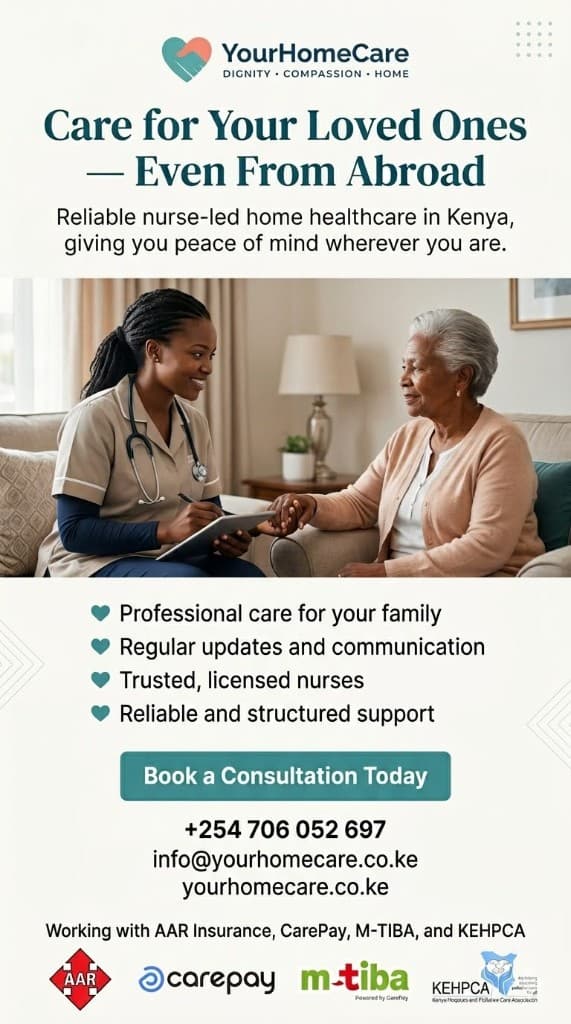
If you are supporting a parent or relative in Kenya from abroad, YourHomeCare can help with assessment-led home nursing, companion care and coordinated updates. Reach out through our contact channels or request an assessment so your family can build a clear plan rather than managing care one anxious message at a time.